
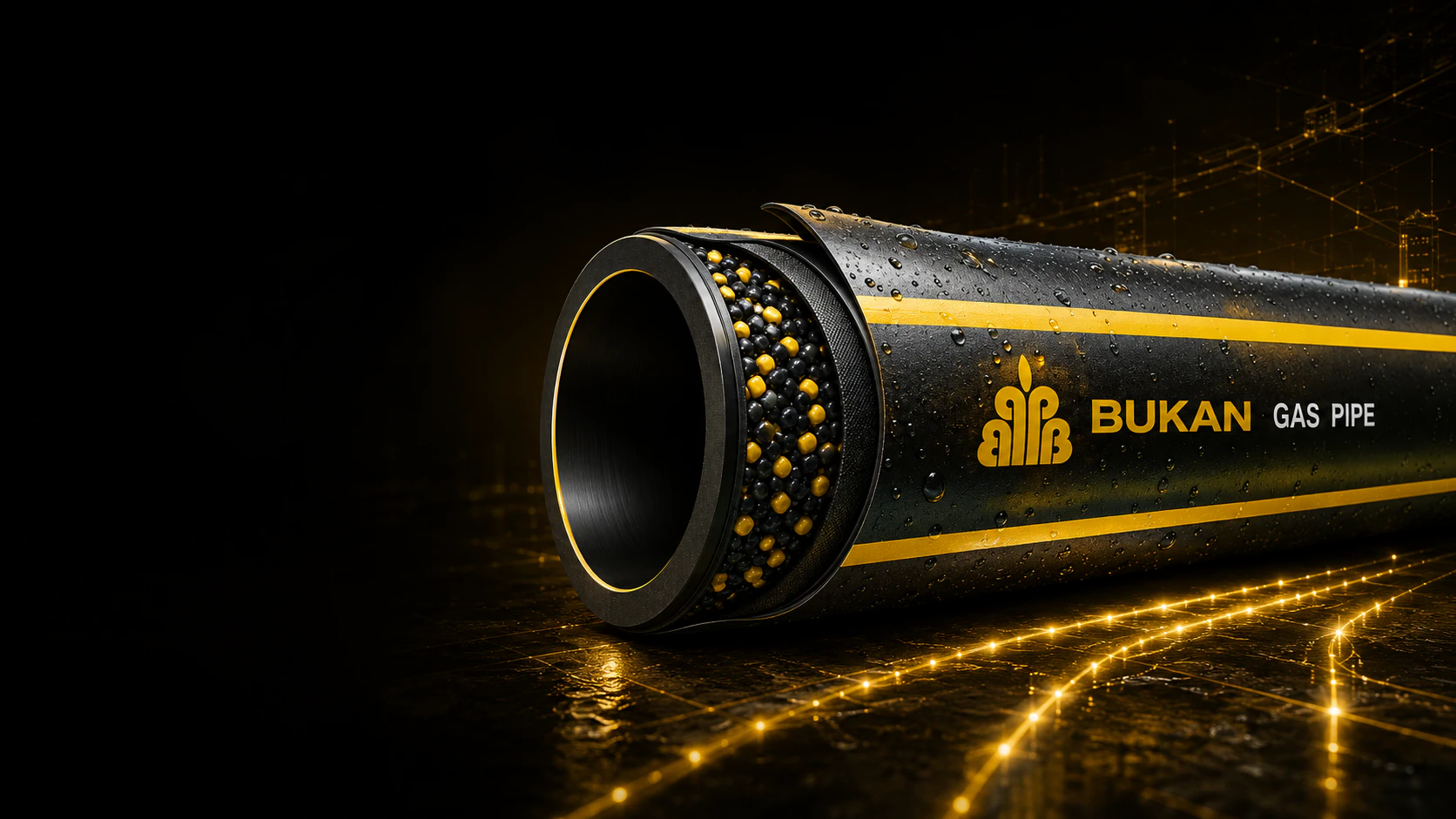
Polyethylene pipe serves urban and rural service connections and distribution branches from steel transmission lines. Electrofusion is the approved jointing method for gas in Iran. For pipe specifications and supply, see the HDPE gas pipe product page.
Which part of a gas network is polyethylene
In gas systems, polyethylene does the distribution and service work — from the pressure reduction station onward, to the customer's service valve. High-pressure transmission remains steel. The governing product standard in Iran is INSO 11223, and the yellow body or yellow stripe is a convention so that a later excavation distinguishes the gas line from the water line at a glance.
Why electrofusion is the accepted method
In a gas network the acceptance criterion for a joint is different from water: a small leak on a water line is lost volume, on a gas line it is a hazard. Electrofusion is the accepted method because the welding parameters are encoded in the fitting itself and read by the machine — the operator's judgement about temperature and time is removed, and the weld record can be logged and audited. Butt fusion is used in gas only within an approved procedure, with a qualified welder and the client's agreement.
Two steps in electrofusion cannot be skipped: scraping the oxide layer off the pipe surface immediately before the fitting is placed, and leaving the assembly undisturbed for the full cooling time. Most welds that look sound and later leak were missing one of the two.
Branching off steel: the transition fitting
Polyethylene cannot be welded to steel. The junction is made with a transition fitting — a factory-made component with a fusible PE end and a steel end, sealed in the factory. It must not be fabricated or substituted on site.
Finding the line after it is buried
Polyethylene is non-metallic, so a metal detector will not find it. A buried PE gas network without a tracer wire alongside the pipe and yellow warning tape above it is incomplete. Those two inexpensive components are what stops the line being cut by an excavator a few years later.
Approval and inspection
In Iran the pipe and fittings, the welder and the welding machine are all subject to gas company approval and IGS specifications. Leak and strength testing before handover, and a record of the welds made, are part of delivering the line rather than optional extras.
Design considerations
- Utility requirements and IGS references where applicable
- Electrofusion qualification and inspection
- Line testing and commissioning per project
FAQ
- Up to what pressure can PE gas pipe be used?
- Its role is distribution and service connection, not high-pressure transmission. The maximum operating pressure is set by INSO 11223 and the gas company specification on the basis of SDR and material grade, and must be taken from the project documents.
- How does gas pipe differ from water pipe?
- The base material is the same, but the standard, the quality control requirements, the marking and the jointing method differ. Water pipe cannot be used in a gas network even at identical diameter and SDR; the line must use pipe carrying gas approval and the corresponding marking.
- Why is gas pipe yellow?
- It is an identification convention, so that a future excavation immediately distinguishes the gas main from water and sewer lines. The colour confers no additional technical property.
- Can a PE gas line be laid above ground?
- No. PE gas networks are designed to be buried. Surface installation exposes the pipe to mechanical damage, UV and temperature cycling, and is not permitted under distribution network rules.