
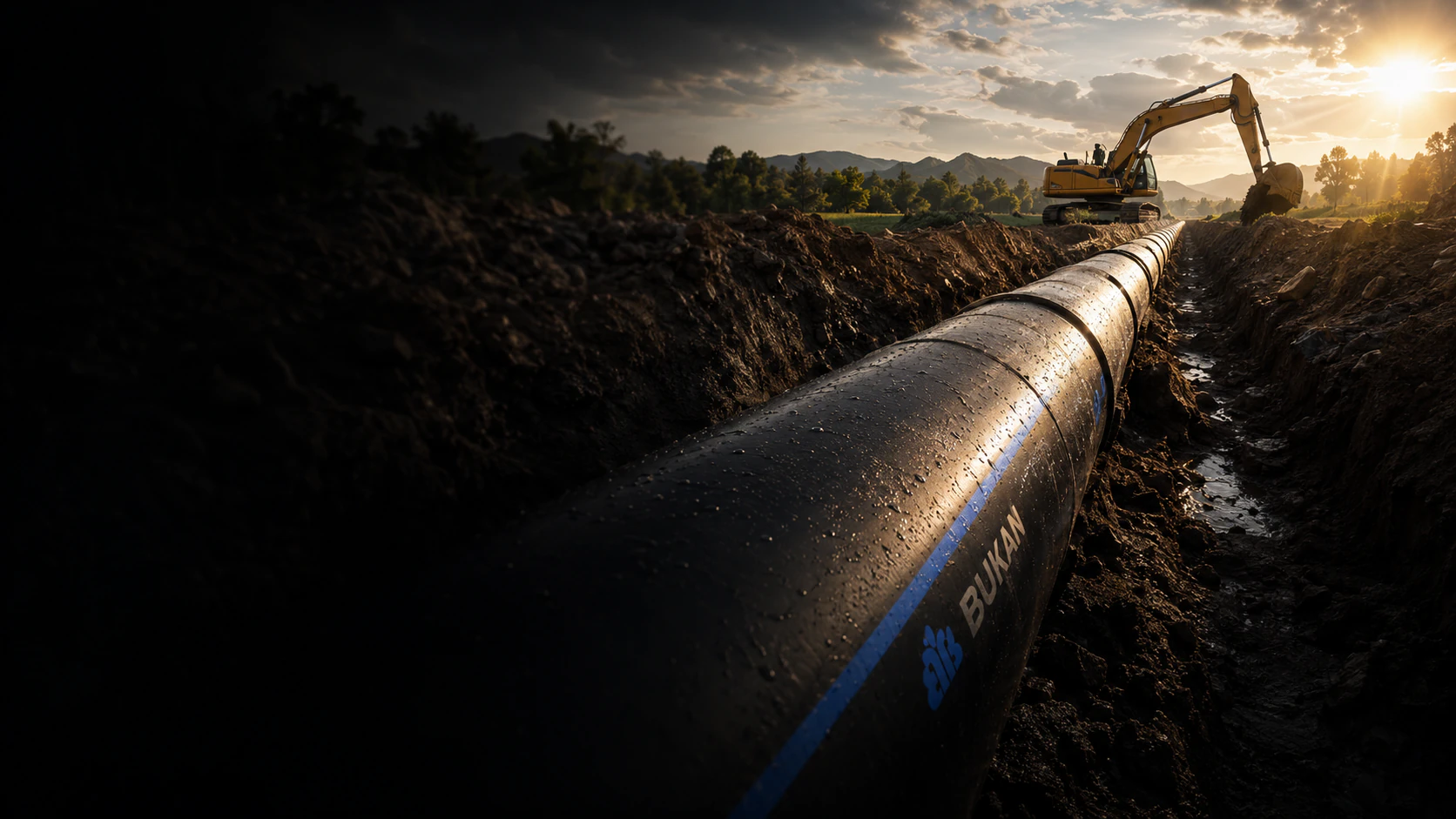
HDPE water transfer
Water Transfer Systems
PE pipe in water transfer networks
PE pipe application areas.
Polyethylene pipe is not one product but a family, and in each application a different standard and a different selection logic applies. This page shows what each application asks of the pipe and what actually drives the choice. Specifications and supply options are on the product pages.
| Water transfer and distribution | Pressure class comes from the hydraulic grade line plus a surge allowance; diameter from flow and permissible velocity. The potable-contact requirement governs. |
|---|---|
| Agricultural irrigation | Beyond flow, distribution uniformity across the block is decisive and usually drives diameter up a size. Pressure class is set by the pump's shut-off head, not its duty point. |
| Gas distribution | The standard and the gas company approval govern. Electrofusion jointing and post-burial traceability are requirements, not options. |
| Sewerage | First establish whether the line is gravity or pumped. On gravity, the criteria are external load capacity and self-cleansing velocity; on a rising main, pressure class. |
| Drainage | Separating the perforated section from the solid section, and matching the filter to soil texture. Diameter comes from peak runoff. |
| Industrial | Chemical compatibility against the actual composition and concentration, and operating temperature. On industrial lines temperature causes more premature failures than pressure. |
| Cable protection | Fill ratio of duct to cable, route bend radius, and the installation method — pulling or blowing — which fixes the required bore finish. |
HDPE water transfer
PE pipe in water transfer networks
HDPE agricultural irrigation
PE pipe in farm irrigation
gas distribution PE pipe
PE in gas distribution
HDPE sewer application
PE in sewer networks
HDPE drainage application
PE in drainage networks
industrial HDPE pipe
PE in industrial fluid transfer
HDPE cable duct
PE cable protection