
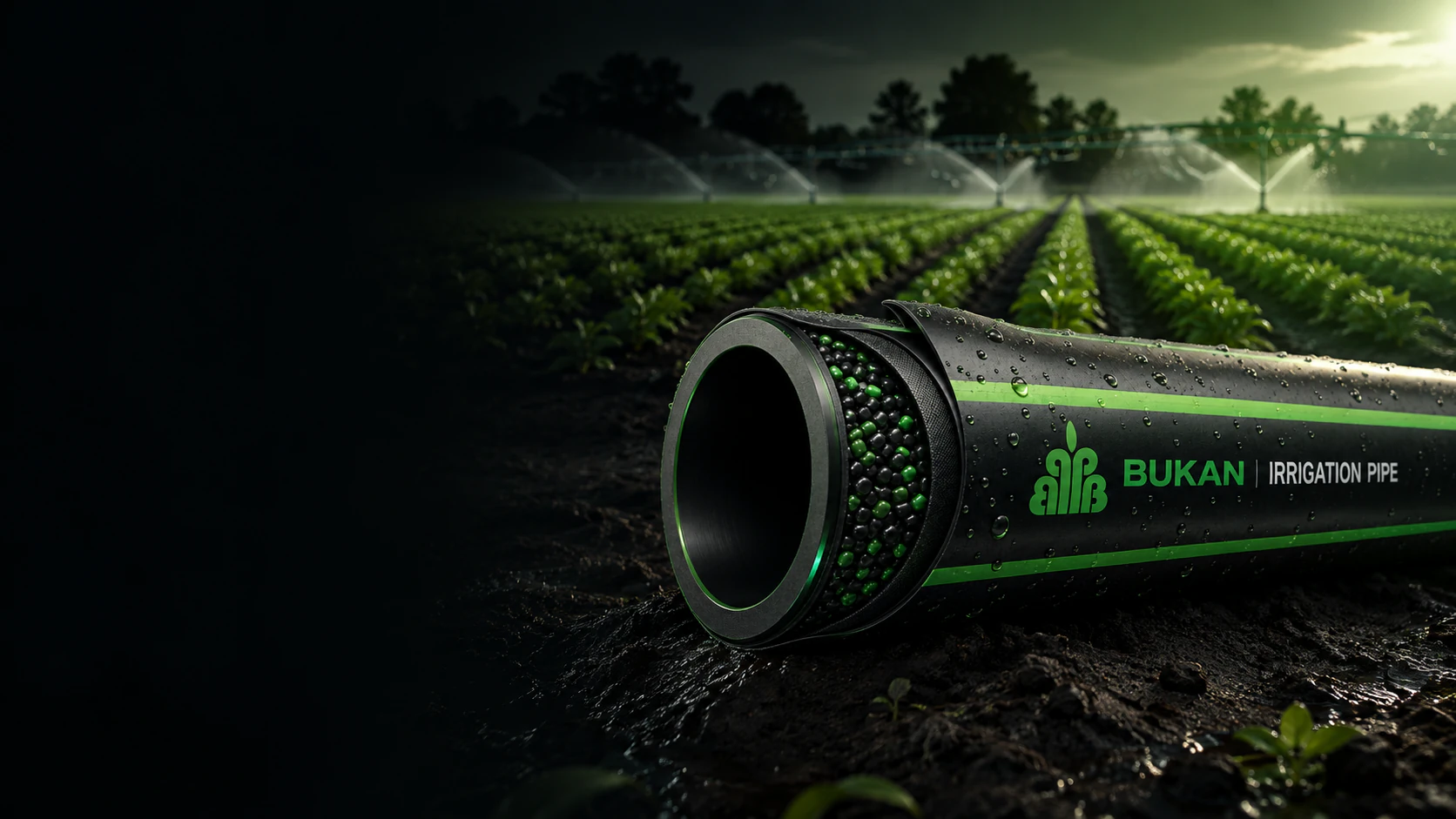
On farms, HDPE forms pressurised mains between the water source, pump station and field irrigation network — drip, sprinkler or subsurface zones. Product selection and pressure class follow the irrigation design.
Three levels, three different pipes
A pressurised irrigation system has three layers, and confusing them leads to the wrong order. The main line runs from the well or reservoir to the control station, carrying the highest flow and pressure. The submain or manifold distributes between field blocks. The lateral is the emitter line itself, working at a far lower pressure. Pressure-rated polyethylene pipe covers the first two levels; the third is a separate product.
The design criterion that usually gets skipped: uniformity
The aim is not simply to deliver water but to deliver it evenly. If head loss along a block is too great, emitters at the head of the run discharge more than those at the tail and the crop grows unevenly. The conventional criterion is that pressure variation within an irrigation block should stay within about 20 per cent of emitter operating pressure. Meeting it usually pushes diameter one size above what flow alone would have selected.
Size on the pump's shut-off head, not its duty point
Field mains run on well or submersible pumps that start and stop frequently, so the line sees pressure cycling. Pressure class should be selected against the pump's maximum head with the valve closed, plus a surge allowance. Selecting PN from the ordinary working pressure is exactly what produces burst fittings in mid-summer.
Surface-laid lines and sunlight
Part of a field system is temporary and laid on the ground. Black polyethylene is UV-protected by the carbon black in its compound, but two things remain true: the pipe wall in direct sun runs hotter than ambient air, so the pressure class needs the temperature derating factor applied; and a surface line moves as it heats and cools each day, so it needs either freedom to move longitudinally or proper restraint.
Filtration decides how long the system lasts
The polyethylene pipe itself is untroubled by well water full of particles; the emitters at the end of the network are not. The filtration station at the head — screen, disc or sand depending on the source — together with the ability to flush line ends, is what determines the working life of the system.
Design considerations
- Pump cycling and transient pressure
- Flexible routing across terrain
- Filtration and control valves upstream of emitters
- UV exposure limits for above-ground runs per project spec
FAQ
- What pressure class should a farm main be?
- Select against the pump's maximum head at shut-off rather than the normal working pressure. PN6 and PN10 are the common classes on field systems; long runs, high lift or a deep well push it higher. The final figure comes from the hydraulic calculation.
- How do I size an irrigation pipe?
- Start from design flow and pick a diameter that keeps velocity in range, then check total head loss across the block. If pressure varies by more than roughly 20 per cent of emitter pressure from head to tail, go up a size. The pipeline design calculator covers this first estimate.
- Is black pipe better than coloured pipe?
- For mains and surface-laid lines, yes. The carbon black in the compound is what protects the pipe against UV. Coloured stripes only identify the application and add no mechanical property.
- Can I use the same pipe for irrigation and drinking water?
- Not unless it was produced for potable water to INSO 14427-2. The reverse — using potable-grade pipe for irrigation — is technically fine but usually more expensive than the project needs.