
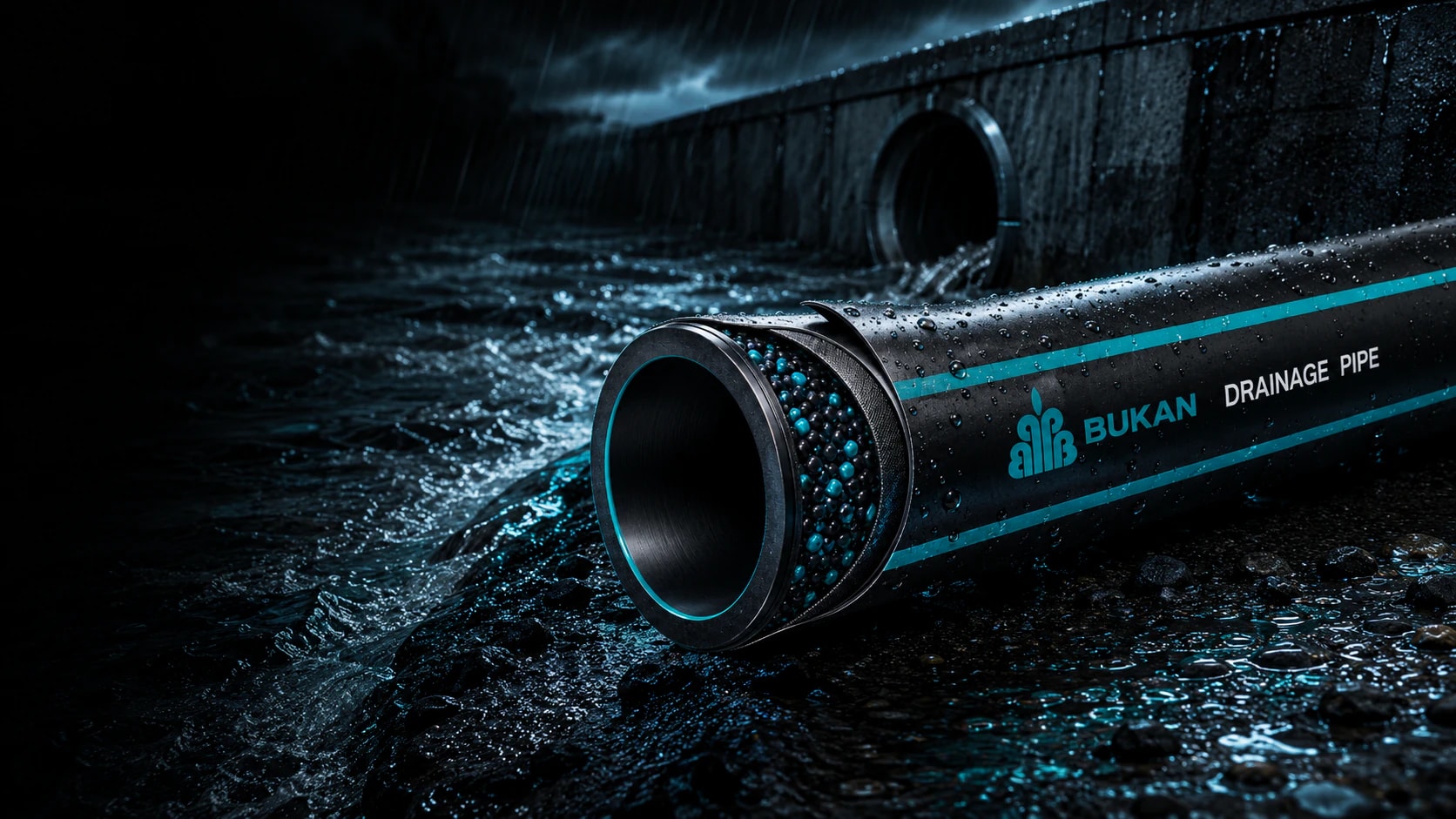
Drainage handles surface runoff and stormwater — not sanitary sewage. HDPE offers hydraulic capacity, installation speed and soil durability for road, site and agricultural drainage.
Drainage is three different jobs
The word covers three distinct tasks, and pipe selection is not the same in all three. Surface and stormwater drainage collects rainfall from roads and sites and has a high instantaneous peak flow. Agricultural drainage lowers the water table in a field and runs slow and continuous. Structural and highway drainage relieves water behind a retaining wall or under a road formation so that pore pressure and settlement do not develop.
Perforated or solid
This is the primary decision. Where water has to enter the pipe from the soil — a field drain, a subgrade drain, behind a wall — perforated pipe is required. Where collected water is simply being conveyed to the outfall, solid pipe must be used; perforated pipe on that leg means water you worked to collect leaks back into the ground on the way. A properly designed drainage system usually uses both, in different parts of the run.
The filter is what decides service life
Drains rarely fail because the pipe fails; they fail because they silt up with fines. Perforated pipe therefore needs a filter — geotextile wrap or a fibre sock — inside a gravel or graded aggregate envelope. Filter selection follows soil texture: in fine-grained and clay soils the wrong filter blinds itself and the drain stops working.
Diameter comes from peak flow, not from habit
For surface drainage, the basis is peak runoff for the project's design return period — not average annual rainfall. Because the line is gravity, its real capacity is set by the grade as built: flattening the grade to reduce excavation depth reduces capacity sharply.
Why polyethylene
- A fused line has no joints, so roots and fines cannot enter at a connection
- It does not corrode in wet or acidic soil, unlike metal and concrete
- It is light and supplied in long lengths, which means fast installation in long trenches
- Its flexibility accommodates settlement of the drained ground without fracture
Fix the outfall before designing anything
The most common field failure in drainage is a system that is built correctly but discharges to a point that is not below the line, or that submerges in the wet season. The line then stays full and drainage stops. The outfall level and its condition in the worst seasonal case have to be established before the network is designed.
Design considerations
- Hydraulic capacity and gradient
- Durability in saturated soil
- Fast civil installation on infrastructure projects
FAQ
- How does drainage pipe differ from sewer pipe?
- By duty and by discharge rules. Drainage conveys surface and groundwater and may be perforated so water can enter it. Sewerage carries contaminated flow, must be fully sealed and must reach treatment. The two networks should not be connected.
- Where should perforated pipe go?
- Only in the collection section — where water has to enter from the soil. The conveyance leg carrying collected water to the outfall should be solid, otherwise part of the flow returns to the ground on the way.
- How long does a PE drain last?
- The pipe itself lasts a long time in soil because it does not rot. What determines the working life of the system is the filter and gravel envelope around it — drains usually fail by clogging, not by pipe failure.
- Can a drain discharge into the sewer?
- Technically, and usually under local rules, no. Storm runoff entering a foul sewer saturates network and treatment capacity during rainfall and causes surcharging.