
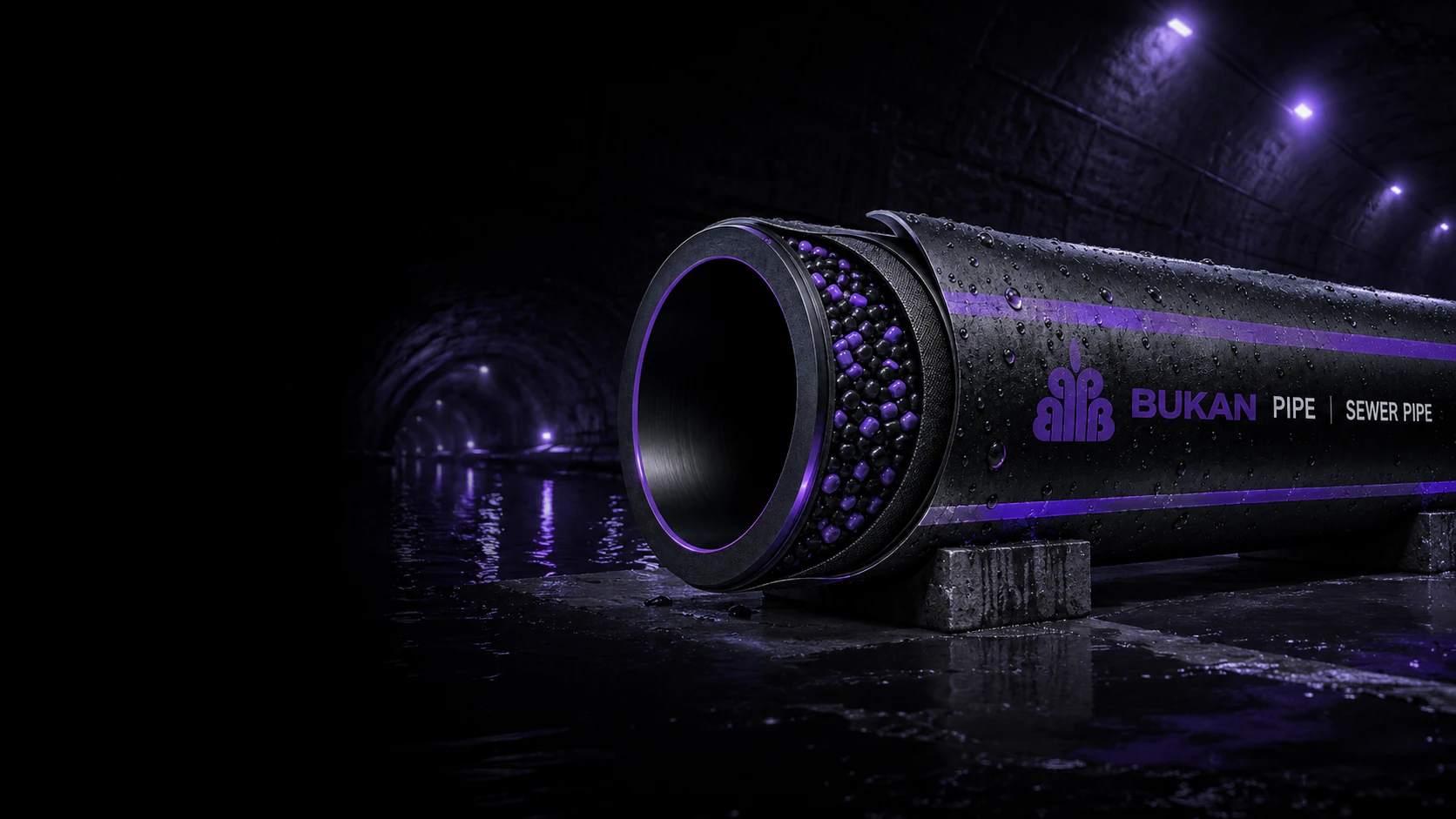
Sewer networks need chemical resistance, grade control and long-term performance in wet soil. This guide focuses on use-case selection; the HDPE sewer pipe product page lists specifications for the sewer product line.
First decide whether the line is gravity or pressure
This split changes the entire selection logic, and if it is not settled at the start the order comes out wrong. In a gravity sewer the flow moves on grade and the pipe carries essentially no internal pressure; what it has to withstand is soil and traffic load from outside, so the selection criterion is ring stiffness, not pressure class. In a pumped rising main the reverse is true: the pipe works under pressure and the criterion is the same PN and SDR used on water mains, with extra allowance for surge when the pump stops.
Gravity lines: grade and self-cleansing velocity
Grade cannot simply be flattened to reduce excavation depth. If flow velocity falls below a certain value, solids settle out and the line silts up progressively. The conventional design criterion is to maintain a self-cleansing velocity of roughly 0.6 to 0.7 m/s at design flow. Excessive grade is not desirable either: it pulls the flow away from full-bore conditions and increases odour and corrosion in downstream structures.
What polyethylene actually solves here: corrosion and infiltration
Two problems dog sewer networks. Hydrogen sulphide generated in stagnant sewage converts to acid at the pipe crown and attacks cementitious structures; polyethylene is inert to that mechanism, which is why it is so often chosen for rehabilitating deteriorated networks. The second is groundwater entering the network through joints, filling treatment capacity with water that should never have been there. In a fused PE line there is no joint to infiltrate through — the line is one continuous element.
Settlement and the connection to concrete structures
Polyethylene is a flexible pipe: it works together with the soil around it, so bedding quality and side-fill compaction matter as much as the pipe itself. The sensitive point is where the pipe enters a manhole or concrete chamber. The structure does not settle and the pipe does, so that junction needs a sealing gasket and a flexible section to keep shear stress from concentrating at the pipe crown.
Chemical resistance in industrial effluent
Polyethylene resists acids, alkalis, salts and domestic sewage. What needs checking is industrial effluent: aromatic solvents and hydrocarbons can swell the wall, and elevated effluent temperature reduces the permissible working pressure. For those lines the actual composition and temperature must be established before the pipe is selected.
Design considerations
- Chemical compatibility with wastewater
- Grade and self-cleansing velocity
- Fusion joints to limit infiltration/exfiltration points
FAQ
- What SDR suits a gravity sewer?
- In a gravity line the criterion is not internal pressure but external load capacity. A lower SDR means a thicker wall and greater ring stiffness, which is what deep burial or traffic loading requires. The final figure comes from the burial depth, soil type and surface loading on that project.
- Does hydrogen sulphide attack polyethylene?
- No. H2S corrosion is a problem for cementitious and metallic structures. Polyethylene is inert to that mechanism, which is one of the main reasons it is used to rehabilitate deteriorated sewer networks.
- Are sewerage and drainage the same thing?
- No. Sewerage carries sanitary or industrial flow and must reach treatment; drainage conveys surface water and runoff. Their design criteria, grades and discharge rules differ, and the two should not be combined in one network.
- How does a sewage rising main differ from a water main?
- Pressure class selection is similar, but two things change: frequent pump starts expose the line to surge more often, and the fluid carries solids, so a minimum flow velocity has to be maintained to prevent deposition.